
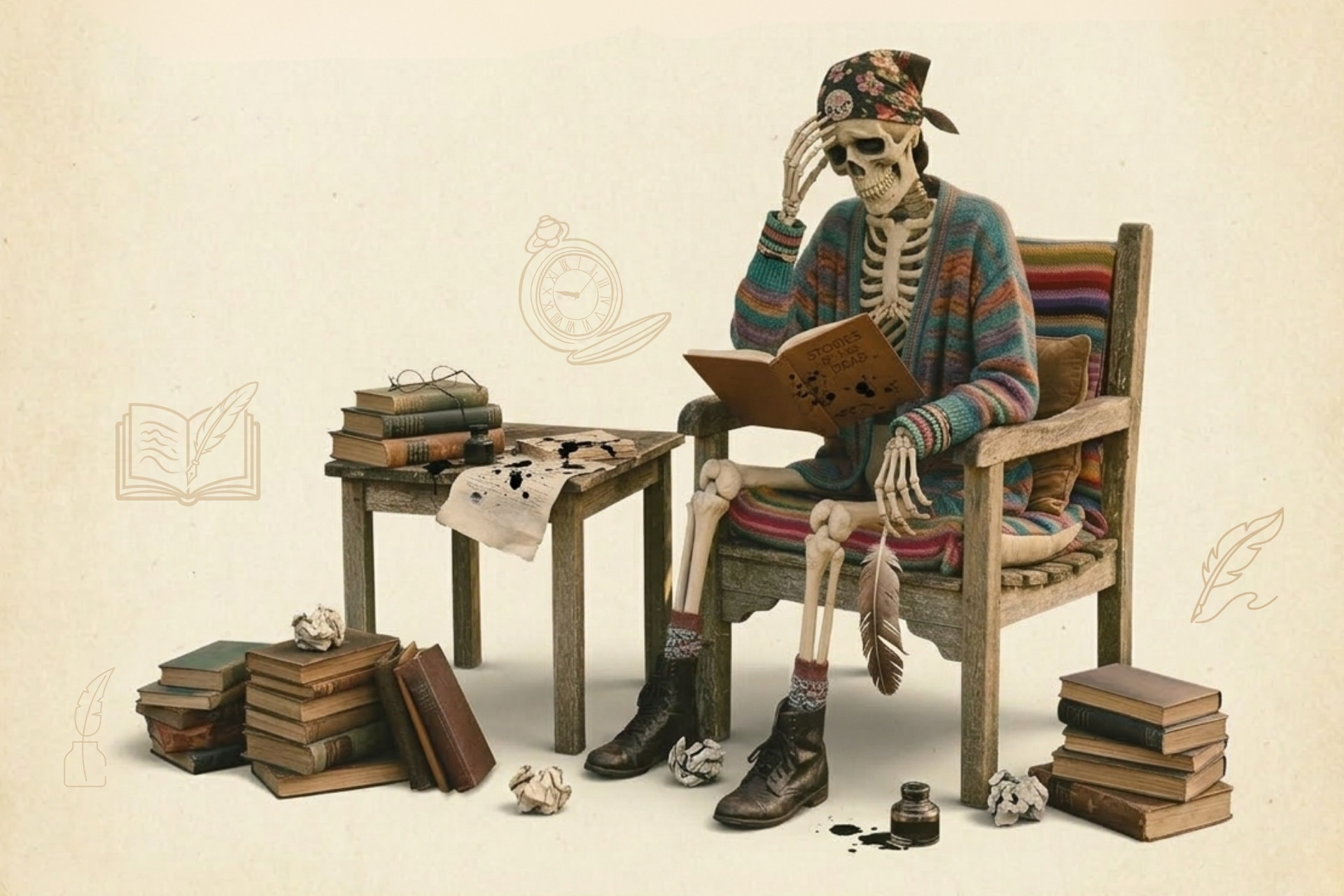
LLMs and AI are eating up their own resources.
The zero click apocalypse is no longer a theory. It’s already the default. Users don’t read articles anymore. They take answers and move on. And when nobody clicks, writers stop earning. When writers stop earning, they stop writing. When writing stops, new content stops appearing on the web. And when the web stops producing new content, AI runs out of fresh data.
In simple terms, the zero-click apocalypse follows a clear chain: LLMs summarize content → users stop clicking → writers stop earning → writers stop publishing → AI runs out of fresh data.
This is how zero click searches quietly reshape the web. Not through one dramatic collapse, but through a slow breakdown of incentives.
I’m not bluffing here. This is how the zero click apocalypse starts. Articles disappear first. AI comes later. A system consuming its own input until the loop breaks.
What the Zero-Click Apocalypse Actually Is
The zero click apocalypse refers to a situation where users consume answers directly from LLMs and AI systems without clicking through to websites like removing traffic, revenue, and incentives for writers to create new content.
To keep it simple, zero-click is the event that happens when answers are directly shown through LLMs replacing search behavior, instead of users visiting pages.
Let’s take a small example. One user searches “trending Q&A platforms in 2026” on Google. Another user searches the same thing on an LLM like ChatGPT or Google Gemini.
When the search happens on Google, the article receives clicks. But when the same query is asked to an LLM, it gives summarized answers and the article gets zero clicks.
And this is where zero click searches begin to matter economically.
When no clicks happen, no revenue is generated. And when there is no revenue, writers earn almost nothing. That eventually leads to fewer people creating new content. And when there is no new content, AI has no fresh data left to use.
This is how zero click searches affect writers in practice — not emotionally, but financially.
Why Traditional SEO Strategies Stop Working in a Zero-Click World
It’s no wonder that traditional SEO strategies are collapsing in a zero-click world. And there are two main reasons for it.
Search Intent Is Being Collapsed
Users now ask their questions directly to LLMs and get the answers inside the assistant itself. And the journey ends there. That’s the main reason search intent is being collapsed.
Google SGE is now answering without clicks. Earlier, long articles used to capture search intent and that model worked as a powerhouse. But now, it no longer happens.
You’ve probably seen AI overviews appear at the front when you search something on Google. That’s AI answers replacing clicks before you even have the time to read any pages.
Featured Snippets and LLM Answers Get the Clicks Now
Featured snippets and LLM answers pull all the insights without even needing to click on a website. The organic space is shrinking badly. This is not just impacting SEO—it’s also making a huge impact on writers.
Perplexity, ChatGPT, Gemini, Bard, and Bing all summarize content. Why not? AI extracts from multiple sources instead of directing traffic to one site and gives you the best possible answers instantly.
Why Humans No Longer Read Long-Form Blogs
Let me make one thing clear: it’s not because the content got worse. As users, instant answers feel more efficient and productive. After all, you don’t need to skim through dozens of pages just to get a vague idea of a topic.
Scanning or summarizing also feels far better than reading pages and pages of content. Even most novel readers go through the summary before deciding whether the book is worth reading fully. That’s the easier path, and people naturally take it.
And nowadays, people trust AI summaries more than the search results page, because the answers feel personally curated for them.
The Writer’s Economy Depends on Clicks – And Clicks Are Disappearing
When I say a writer’s economy depends on clicks, I don’t mean writers rely only on clicks. But traffic coming into a piece of content is what drives ads, and ads are what drive revenue.
That traffic also powers affiliates, AdSense, and sponsorships, which together make up how most writers actually earn from their work.
When clicks disappear, all of that disappears with it. With zero clicks, ads stop working because there are no impressions. Affiliates don’t convert. Sponsorships lose value. Let me give you a simple example to understand this.
You can rank #1 for “best running shoes”, but if an AI assistant answers the question directly, no one ever visits your review page. Your affiliate links are never opened, and you earn zero commission.
Why Writers Will Gradually Stop Writing
This isn’t some dramatic issue but more on the mathematical side. Less traffic leads to less income. Less income leads to burnout. Burnout leads to silence.
This is why writers will stop writing because of AI not because they dislike writing, but because writing stops paying.
Writers don’t quit loudly. They exit quietly. Into brand work, paywalled newsletters, and private platforms.
How SEO Strategy Fails in a Zero-Click World (Directly from Search Behavior)
You Can Rank First But Still Get Zero Clicks
If you think that being in the top 3 results of a SERP page will get you traffic, you’re misunderstanding how search works now. With fewer clicks happening, SEO signals get weaker over time, even if you’ve applied the best SEO strategies possible.
Long Tail Funnels Are Collapsing
Earlier, the flow was simple: a query leads to an article, and the article leads to conversion. Now the flow has changed. It moves from query to assistant, then to answer, and then exit.
That’s how long-tail funnels collapse when no action is taken.
The Feedback Loop LLMs Depend On (And Are Breaking)
There’s a causal chain linking this entire system together, and it’s easy to miss because it doesn’t break all at once. It works quietly in the background, with each step depending on the one before it.
- Writers publish original content
- Content feeds the open web
- LLMs summarize and answer
- Users stop clicking
- Writers stop earning
- Writers stop publishing
- Fresh information dries up
And this is how the feedback loop LLMs depend on begins to break over time—not through one sudden collapse, but through a slow erosion where each step weakens the next, until the system is left recycling its own outputs instead of learning from something new.
What Happens When the Web Stops Being Updated by Humans
Imagine a web where humans slowly stop updating content. Not all at once. No big announcement. It just slows down. Articles stop getting refreshed. New viewpoints stop showing up. The same ideas get repeated again and again, slightly reworded, slightly summarized, but never really new.
Over time, information becomes stale. AI models keep pulling from the same pool, recycling the same answers. Even places like Reddit, Quora, and AnswerClub stop feeling alive. They’re still there, but they’re no longer evolving. They turn into archives instead of conversations.
This is the long-term effect of the zero click apocalypse.
This Isn’t the End of Writing – It’s the End of Writing for Free
Writing isn’t dying. What’s dying is writing for free on the open web.
As clicks disappear and revenue dries up, writers don’t just quit. They move. Behind paywalls. Into brands. Into newsletters, private platforms, and closed communities where writing still pays.
What’s left on the open web is fewer writers and fewer real perspectives. Most of the remaining content comes from beginners experimenting with AI, while experienced writers publish somewhere else entirely.
Conclusion
LLMs and AI answers have reduced the need to click and read long-form content. For users, this feels efficient and convenient. Answers arrive instantly, with no effort required.
But clicks are what fund writers. Traffic is how writing turns into income. When clicks disappear, writers stop earning. And when earning becomes impossible, writing slows down.
With fewer people producing original work, fresh content on the web starts drying up. That creates a problem for AI itself. LLMs rely on new, human-generated information to stay relevant, and without it, they’re left recycling what already exists.
This isn’t just an SEO or traffic issue. It’s about how knowledge is created and sustained. Writing isn’t going extinct, but the platforms and formats will change. The web might survive with fewer clicks. It won’t survive without people who are paid to write.


