Businesses are still posting on Instagram like people are reading. But most people aren’t.
They’re watching. Or half-watching and scrolling. Or letting it run while they do something else. That difference sounds small. But is it? No. If you really think about how you use Instagram today, it probably doesn’t feel the way it used to. Not worse, exactly. Just different. Quieter. More automatic.
People don’t open the app to check updates anymore. They open it to pass time. Sometimes consciously. Often without thinking about it at all.
The feed starts moving on its own. Videos play before you’ve decided you want to watch anything. One scroll turns into another. A few minutes disappear. Then a few more. At some point it’s not even entertaining, it’s just there.
That shift didn’t break Instagram. It changed it.
And most businesses are still treating the platform like nothing fundamental happened.
Why don’t people open Instagram to check updates anymore?
Instagram used to feel intentional.
You opened it to see what friends posted. Where someone travelled. What you missed while you were away. There was a reason, even if it was casual.
That reason has mostly vanished.
Now people open Instagram the way they open a fridge when they’re bored. Not because they’re hungry. Just checking. I do it too, while waiting, while eating, while lying on the bed doing nothing in particular.
The app fills silence before the thought even forms. Content shows up before the user asks for it. And once that happens, the user rarely pushes back.
That’s not social browsing anymore.
How did participation turn into passive watching?
Instagram didn’t announce this shift. There was no update saying “engagement matters less now.”
People changed first. Earlier, the platform rewarded participation. Posting. Replying. Being present in conversations. If you didn’t show up, you disappeared.
Now the platform rewards retention. How long something keeps playing. Whether your thumb slows down. Whether the scroll pauses for a second.
People still like and comment, but mostly on things that feel easy like memes, outrage, familiar formats. Content that doesn’t ask them to think or respond meaningfully.
Meaningful interaction didn’t increase. It was replaced. That’s the moment Instagram stopped behaving like a conversation and started behaving like a channel.
Why does Instagram now feel like background noise?
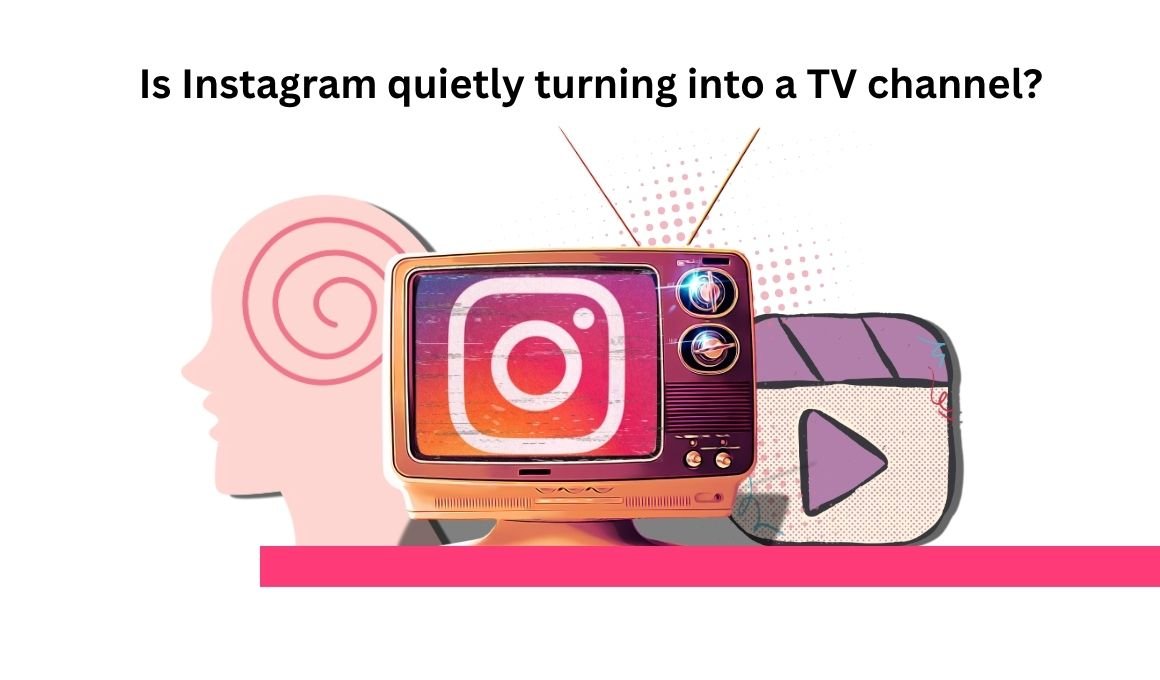
Think about how TV works. It stays on. You’re not fully watching all the time. Life happens in the background while the screen keeps running.
Instagram now behaves the same way. People scroll while doing other things. Even when nothing feels interesting, the feed keeps moving.
Scrolling continues out of habit, not excitement. That’s no longer entertainment. That’s a retention loop.
More than television, Instagram has become the screen people are most stuck with, because it’s always in their hand.
What does this shift mean for businesses on Instagram?
Most brands are still creating content as if people are paying attention. Reading carefully. Willing to interact. They’re not.
People consume Instagram the way they consume TV; half-focused, emotionally driven, quick to skip anything that feels like effort.
So content that demands work, long explanations, heavy context, “comment your thoughts” prompts, quietly disappears. Not because it’s bad.
Because it’s built for a different kind of attention. This is why Instagram feels confusing for businesses right now. Metrics look fine. Activity exists. But outcomes feel unclear.
How do personalised ads work in an Instagram-for-TV environment?
This shift doesn’t just change content. It changes how advertising works on Instagram.
Instagram ads were treated like direct-response tools, built for individual attention, quick clicks, and immediate action.
But now, it work work the same way anymore. Atleast with tv style feed.
Ads don’t interrupt, they blend. You don’t always notice them consciously. You remember them later. Sometimes you don’t even realise where the memory came from.
And here’s the key shift most businesses miss:
People may not act alone.
One person scrolls.
Someone else notices.
The decision happens later, sometimes offline, sometimes together.
This is closer to family intent than individual intent.
And another thing most brands will misread: TV changes who the ad is for. On a phone, Instagram ads feel personal. On a TV, they become shared by default.
Even if one person controls the account, the screen belongs to the room. Family members notice. Someone walking past notices. The reaction isn’t a click, it’s recognition, or rejection. That’s how TV advertising has always worked, and Instagram doesn’t escape that just because it’s “digital.”
And here’s where it can go wrong fast. Over-personalisation feels uncomfortable on TV. When the ad is clearly meant for “you” but shows up in front of everyone, it feels intrusive, not smart.
Trial-and-error ads that platforms usually get away with on phones feel loud and annoying on a shared screen. This is where brands will burn money, pushing irrelevant ads just to test, without thinking about context.
So yes, Instagram TV is an opportunity for advertisers. But only if they understand this shift. The goal here isn’t clicks or clever targeting. It’s recognition that doesn’t make people want to mute the screen.
Just like TV ads influenced household decisions without clicks, Instagram ads now influence memory, preference, and familiarity before action.
Ads that try too hard to sell get skipped instantly. Ads that feel native; same pace, same tone, same visual language, tend to stay longer.
In an Instagram for TV environment, the goal of ads isn’t interruption. It’s recognition.
What kind of content works in a TV-style feed?
On television, content survives when it: hooks fast, is easy to consume, feels familiar, and repeats formats people recognise.
Instagram now rewards the same things. Good content today: doesn’t explain too much, communicates quickly, feels recognisable before it feels new, and works even if the viewer never interacts.
Recognition matters more than replies. Memory matters more than comments.
This isn’t about chasing trends. It’s about respecting how attention actually works now.
How can businesses adapt without becoming cringey?
Adapting doesn’t mean dancing, pointing at text, or copying creators. It means changing how you think about the platform.
Instead of asking: “What should we post today?”
Ask: “What would someone recognise if they saw us three times this week?”
Instead of: “How do we get comments?”
Ask: “Would this still work if no one interacted at all?”
Instead of: “How do we go viral?”
Ask: “Does this feel like part of something ongoing, or just another post?”
Instagram now rewards familiarity over novelty, just like television always has.
Why is this shift an advantage for early-moving brands?
Most businesses are still trying to talk on a platform where people are mostly watching. That’s the opportunity.
Brands that win won’t be the loudest. They’ll be the most recognisable. They’ll design content for passive consumption, build repeatable formats, and stop expecting effort from the viewer.
Instagram didn’t stop being social. It stopped being conversational. And brands that understand this early won’t just get views, they’ll get remembered.
So, is Instagram really a TV channel now?
More than a channel, it’s an app. Atleast for now. But behaviour decides platforms more than features do.
The moment scrolling turned passive, Instagram crossed into television territory quietly, without announcements.
For businesses, the question isn’t whether this change is good or bad. It’s whether your content is built for the Instagram people actually use today or the one you still think exists.