For the last two years, AI Search has been confusing for almost everyone in marketing.
Your content could show up in AI-Overviews. It could appear inside AI-generated answers. People could be discovering your brand through AI Search without even clicking your website.
But there was one big problem. Nobody could properly track it. SEO teams were spending time and money on AI SEO, content marketing, and Generative Engine Optimization without clearly knowing what was working and what was not.
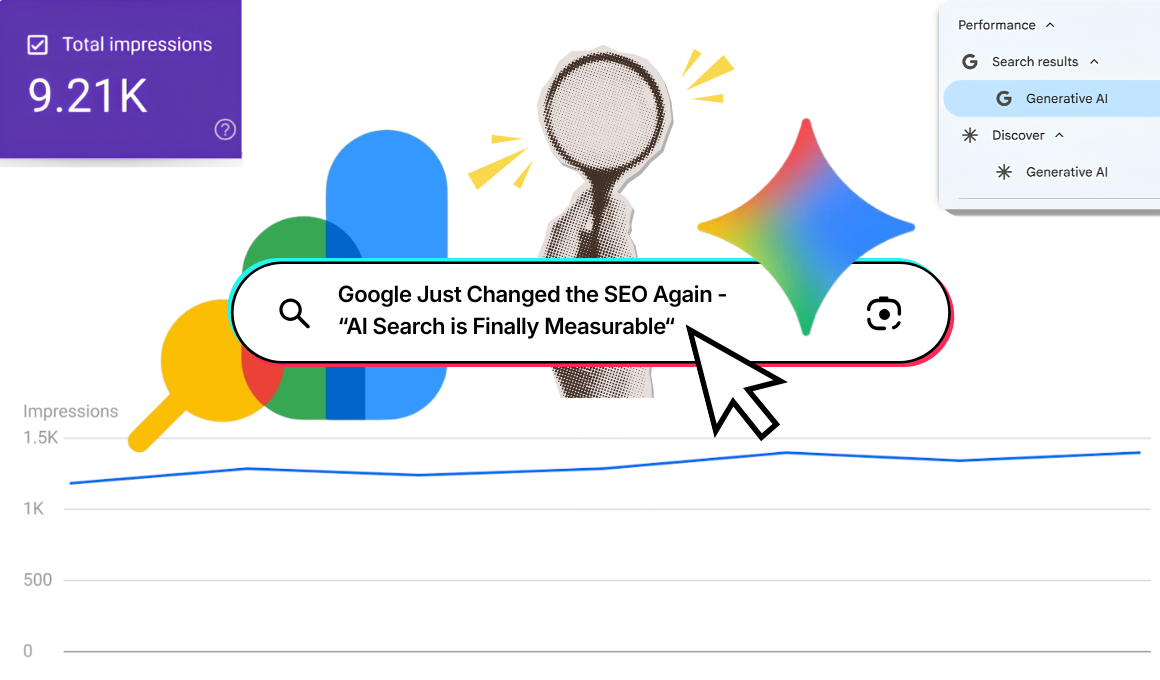
That finally changes now. Google has started rolling out new AI Search performance reports inside Google Search Console. These reports help website owners understand how their content performs inside AI-powered Search and Discover experiences.
And honestly, this is much bigger than a normal Search Console update. Google is basically saying one thing very clearly: AI Search is now important enough to measure separately.
The Biggest Problem With AI Search Until Now
Till now, AI Search has felt like a blackhole. Your content has been appearing inside AI-generated answers, but there’s no proper visibility into it. People kept asking questions like:
- Is my website showing up in AI Overviews?
- Is AI Search sending traffic?
- Are AI answers reducing clicks?
- Is AI SEO even worth focusing on?
The problem was simple. There was no proper reporting.
Search Console showed your normal impressions and clicks, but AI-visibility was mixed into the overall data. That made it difficult to understand what was coming from traditional search and what was coming from AI-powered search experiences. And this became too frustrating for founders and marketing teams.
How Do You Invest In AI SEO If You Cannot Properly Measure Results?
That uncertainty stopped many businesses from taking AI Search seriously. Now Google is finally changing that.
What Google actually announced is that they’re rolling out dedicated AI Search reports inside Search Console and it’s currently rolled out in the UK.
These reports will help websites track visibility across:
- AI Overviews
- AI-powered Search experiences
- AI Discover experiences
Instead of treating AI Search like part of normal SEO reporting, Google is now separating it properly. Sometimes your brand may appear inside an AI-generated answer even if users never click your website.
Earlier, there was no clean way to track that visibility. Now there is. Google also mentioned that this rollout is currently limited to a small number of websites while they test and improve the reports before wider access.
Bing Webmaster Actually Did This Earlier
One interesting thing most people are missing is that Google is not the first company to introduce AI visibility reporting.
Bing Webmaster Tools had already started showing AI and Copilot-related visibility insights earlier. Microsoft moved faster here. They understood earlier that AI Search needed separate reporting and separate visibility tracking.
Google took more time and initially mixed AI visibility into broader Search Console reporting. Now, Google is finally catching up. And honestly, that is good news for everyone working in SEO and content marketing.
Because AI Search without reporting creates confusion, not strategy.
Why This Update Matters More Than Most Founders Realise
Most founders still think SEO is mainly about rankings and traffic. But search is changing very quickly. Earlier, SEO was mostly about:
- ranking on Google
- getting clicks
- increasing organic traffic
Now there is another layer. Your content can influence users even before they visit your website. Your brand might appear inside AI generated answers or get cited in AI Overviews. Users may start trusting your business before they even click.
And now businesses can finally start measuring it properly. This is why this update is important. AI SEO is no longer just theory or hype. Google is officially treating it as a measurable part of Search.
Generic Content Is Becoming Worthless
This is the part many businesses still refuse to accept. AI systems can already summarise generic content instantly.
If your blog says the same thing as every other website, there is no reason for AI Search to prioritise your content. The old SEO model rewarded volume. The new AI Search model rewards authority.
That means:
- original insights matter more
- founder perspectives matter more
- first-hand experience matters more
- expert commentary matters more
- deep topical expertise matters more
The websites still publishing recycled SEO blogs are going to lose visibility very quickly. Because AI-generated search removes the value of generic information fast. What survives is expertise.
What Smart Businesses Should Do Next
The biggest mistake companies will make is treating this like just another Search Console feature.
First, audit your existing content properly. Look for content that is useful, expert-led, original, experience-based, and opinion-driven. Generic SEO blogs are becoming less valuable because AI systems can already summarise basic information very easily.
What works better now is original thinking. Founder insights, customer stories, case studies, industry observations, and first-hand experience matter much more.
Second, focus on topical authority. Publishing random blogs for keywords is becoming outdated. AI Search prefers websites that consistently cover topics deeply and build expertise over time.
Third, start tracking AI visibility separately. Do not mix AI Search visibility with your regular SEO reporting.
AI-powered search is becoming its own layer of visibility, and businesses that learn how to measure it early will have an advantage later.
The Bigger Question Nobody Is Talking About
This update also creates another interesting discussion.
“Should publishers allow AI systems to use their content?” Google is also testing controls that may allow websites to manage how their content appears inside AI-generated answers.
That creates a completely new business decision. Some companies may want maximum AI visibility because it increases authority and discovery. Others may worry that AI-generated answers could reduce direct website traffic.
This debate is only going to grow bigger over the next few years.
What Google Is Really Telling Us
This update proves one important thing. AI Search is no longer an experiment. Google is building long-term systems around:
- AI Overviews
- AI Mode
- AI Search reporting
- AI visibility
- publisher controls
These are not temporary features anymore. Search itself is changing. And businesses that understand these changes early will have a major advantage over competitors who still think SEO is only about rankings.
Final Thoughts
For the last two years, businesses were blindly reacting to AI Search without properly understanding it. That phase is over now.
Google has officially turned AI Search into a measurable visibility channel. And this changes SEO permanently. The old SEO playbook focused on rankings and traffic. The new reality is about authority, visibility, and expertise inside AI-generated search experiences.
Businesses still publishing generic SEO content are going to lose relevance fast. Because AI systems do not reward repetition anymore. They reward expertise.
The companies that win in AI Search will not be the ones publishing the most content. They will be the ones publishing the most useful and authoritative content. That is where the search is heading.
And businesses that understand this shift early will dominate visibility while everyone else struggles to catch up.