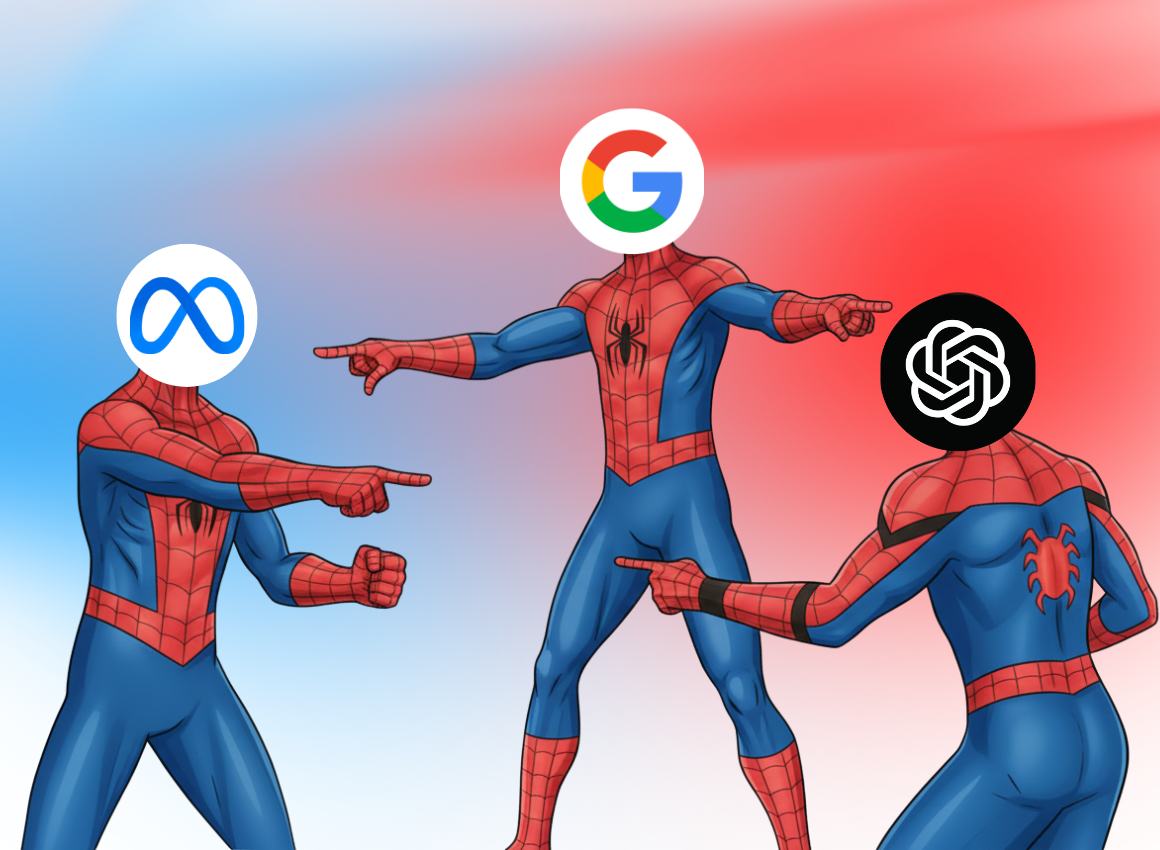
Most marketers think advertising changes slowly. But iIt doesn’t. They stay boring for years, then suddenly break all at once.
And that’s the reason most people miss out on such major changes. Leaving them aside, if you strip away the hype, you’ve only seen this kind of break happen twice before.
First, in 2000, when Google launched ads and made intent visible for the first time. Then, in 2007, when Facebook introduced meta ads and proved attention itself could be bought at scale.
Now in 2026, a third moment is taking shape – driven by ChatGPT ads and how AI assistants are changing how people compare options and make decisions.
It doesn’t look like an ad platform. It doesn’t even feel like marketing yet. But it’s already being compared to Google Search ads and Meta ads for a reason. ChatGPT doesn’t behave like Google. It doesn’t behave like Meta. And trying to force it into either mental model is where most marketers will get it wrong.
What actually makes an advertising shift worth your attention
Not every new ad platform deserves your time. A real advertising shift doesn’t feel exciting at first. It usually feels annoying and slightly disruptive. Like something that doesn’t fit cleanly into how you already work.
It changes the moment when someone pauses and thinks, “Okay, now I need to choose.” Most platforms just add noise. A few move that moment of influence and when that happens, you don’t just optimize campaigns, you rethink your whole funnel.
Google Search Ads (2000): When intent stopped hiding
Before search ads, marketing involved a lot of educated guessing.
Then Google made its intent visible. People started telling you exactly what they wanted, in their own words, often minutes before acting on it. Your ads didn’t need to manufacture desire. They just needed to show up at the right moment.
That’s why Google Search ads worked so well. Because, discovery was already happening. Google just intercepted it.
Even today, search ads still drive some of the highest commercial intent across paid channels. You’re not convincing someone to care. You’re meeting them when they already do.
That’s when marketing stopped feeling like educated guessing and started feeling grounded. Keywords replaced hunches. Timing stopped being a mystery. You could finally tell why something worked instead of just hoping it did.
Meta Ads (2007): When attention became the product
Meta flipped that logic of intent when it started the ads in 2007.
On Facebook and Instagram, nobody opens the app looking for your product. Your audiences are here to scroll and kill time. Waiting for something to catch their eye.
And yet ads work. That’s because Meta monetized attention. Desire could be created mid-scroll. Emotion mattered more than timing and scale mattered more than precision.
This is why Meta ads still dominate top-of-funnel spend. They’re not about capturing demand but creating it.
Search shows up when someone already knows what they want. Social shows up when they don’t. That gap between the two is where Google & Meta built an empire.
ChatGPT Ads (2026): Advertising enters the decision moment
ChatGPT is about to change the sequence again. You don’t open ChatGPT to browse. You open it when something is unclear. When you’re comparing options. When you’re trying to think straight.
That mental state matters. ChatGPT ads are expected to roll out in the US first because ChatGPT has crossed a threshold Google and Meta had to reach too: habit. People don’t experiment with it anymore. They rely on it to narrow choices and make decisions.
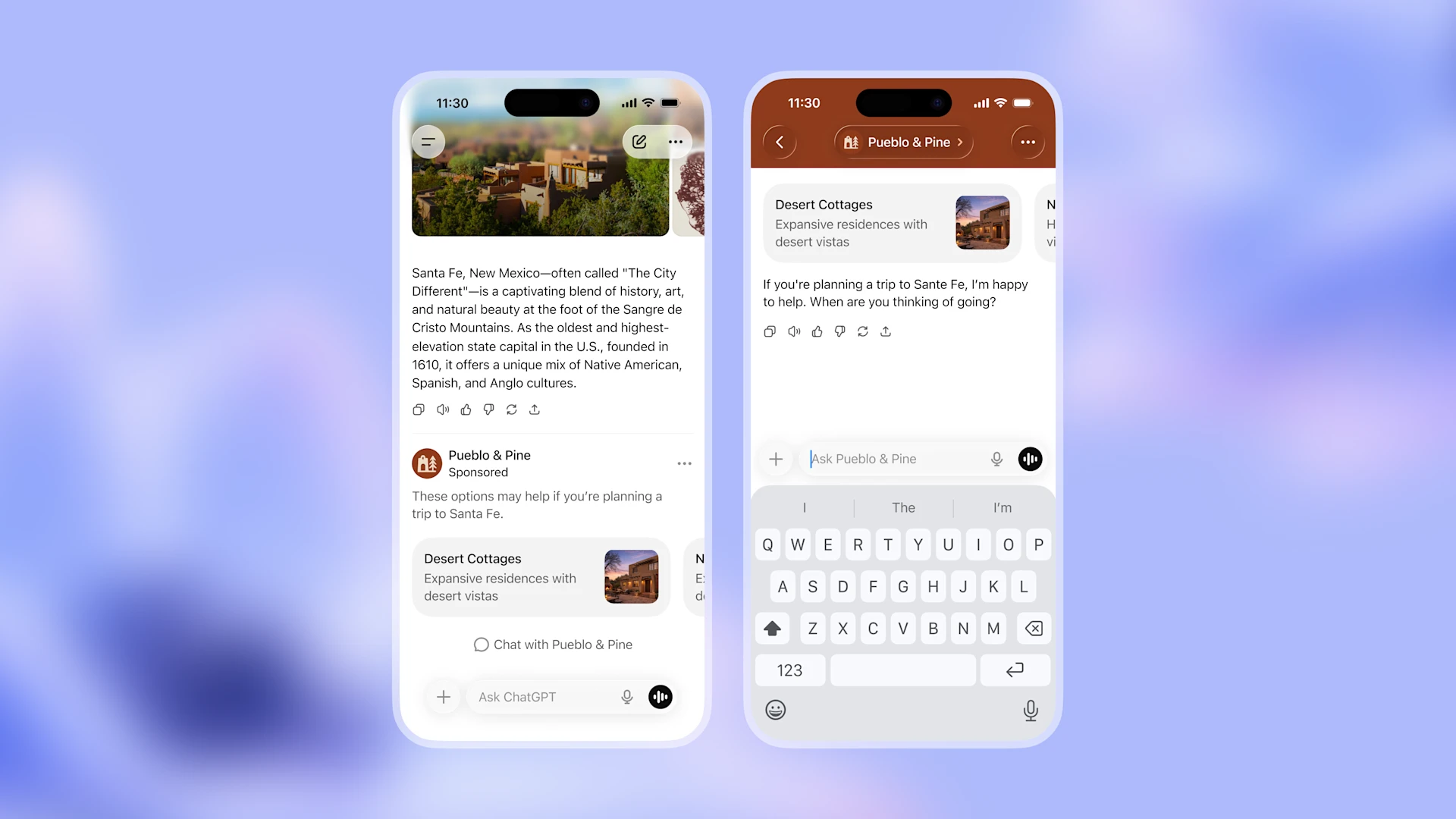
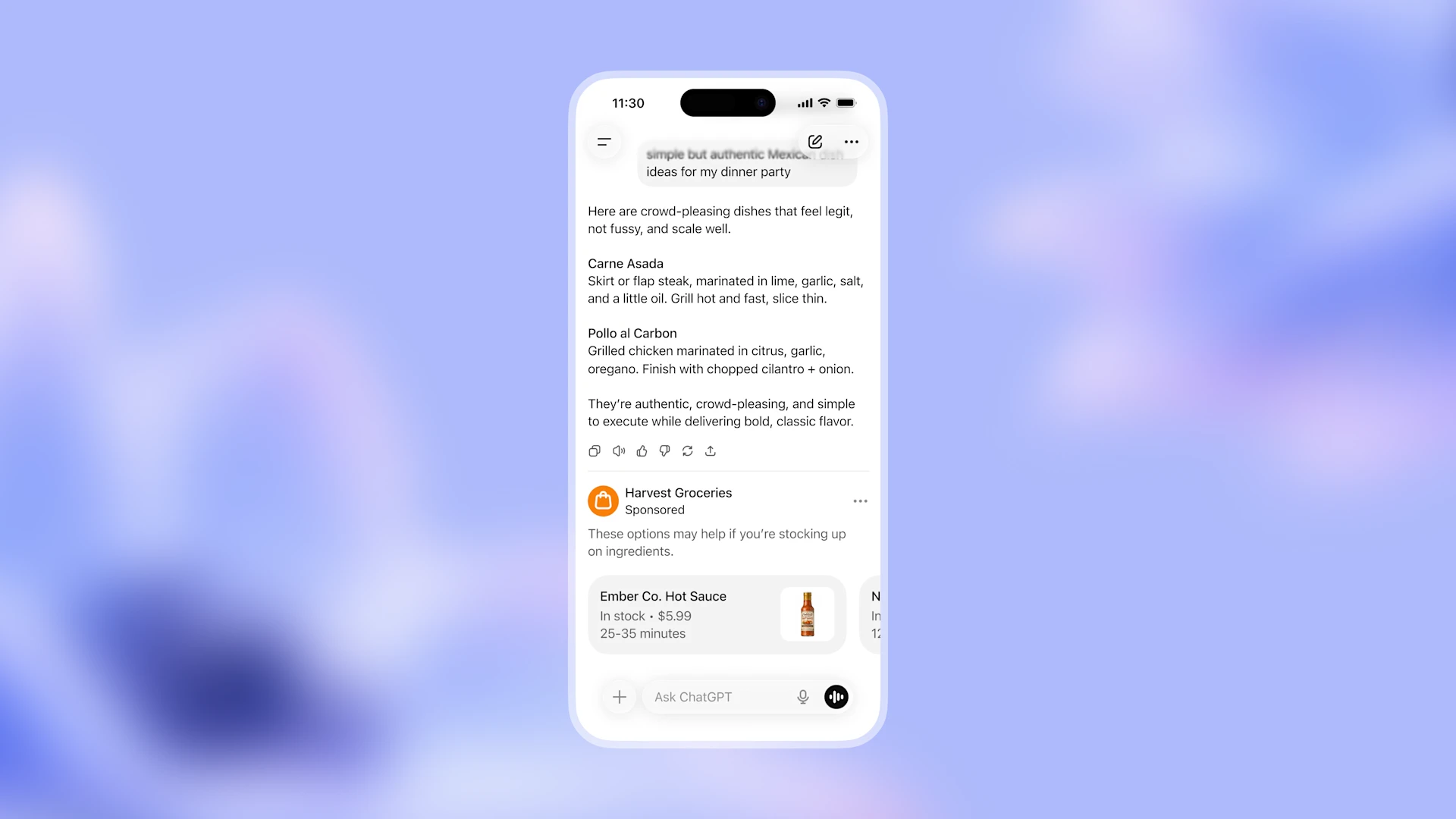
What’s expected to emerge isn’t interruption or keyword matching. Ads are likely to appear after answers, sitting next to reasoning instead of competing for attention.
That changes intent. This isn’t discovery like search or passive scrolling like social. It’s decision intent. The question isn’t “what exists?” It’s “what should I do?”
When a recommendation fits, it feels natural. When it doesn’t, trust drops fast. There’s no patience for hype at this stage.
None of this is live at scale yet. But the direction is clear. If ads sit next to answers, persuasion gets harder and relevance becomes non-negotiable. Bad ads won’t fail quietly. They’ll fail immediately.
From discovery, to attention, to decisions
If you zoom out, the pattern becomes obvious. Google captured discovery. Meta captured attention. ChatGPT is starting to capture judgment.
Each shift compressed the funnel. What used to take multiple touchpoints now happens in fewer, heavier moments. Research habits are shrinking, not expanding. People are outsourcing early thinking to AI and moving faster toward a decision.
The funnel didn’t disappear. It collapsed inward. That compression is what makes this shift important, not the ad unit itself.
What this changes for you as a marketer
You don’t get as much time anymore.
If your positioning is vague, it shows up immediately. If your value proposition needs a long explanation to make sense, that friction becomes visible fast. If your product doesn’t clearly belong in the moment someone is deciding, ads won’t save you.
You’ve probably seen this already. Average brands performing well because they were the obvious choice. Some really good brands struggling because they showed up where they didn’t belong.
ChatGPT ads don’t reward clever persuasion. They reward alignment.
Will ChatGPT Ads replace Google Ads or Meta Ads?
No. And it doesn’t need to.
Search still owns exploration. Social still owns scale and demand creation. ChatGPT ads will occupy a different moment altogether.
Budgets won’t shift overnight. They’ll move quietly, use case by case, as you notice where decisions are actually being made. That’s how real shifts usually happen. Slowly, then suddenly.
Who should be paying attention first
If your buyers compare options before purchasing, this matters to you.
SaaS, B2B services, ecommerce where alternatives are obvious. Local services where people ask “what’s the best option near me.” These categories live and die at the decision stage.
Impulse buys will continue to thrive on social media but decision-driven purchases won’t.
Why this shift matters more than the ad format itself
This isn’t about AI putting ads everywhere. It’s about how you and your customers think now.
Google changed how you search. Meta changed how you desire. ChatGPT is starting to change how you choose. Once you see it this way, the question stops being “should I run ads there?” and becomes something more uncomfortable and more important:
Does your brand deserve to show up when someone is deciding?
That shift is already happening. Most people won’t notice it until performance starts behaving differently. By then, the window to adapt is smaller.