
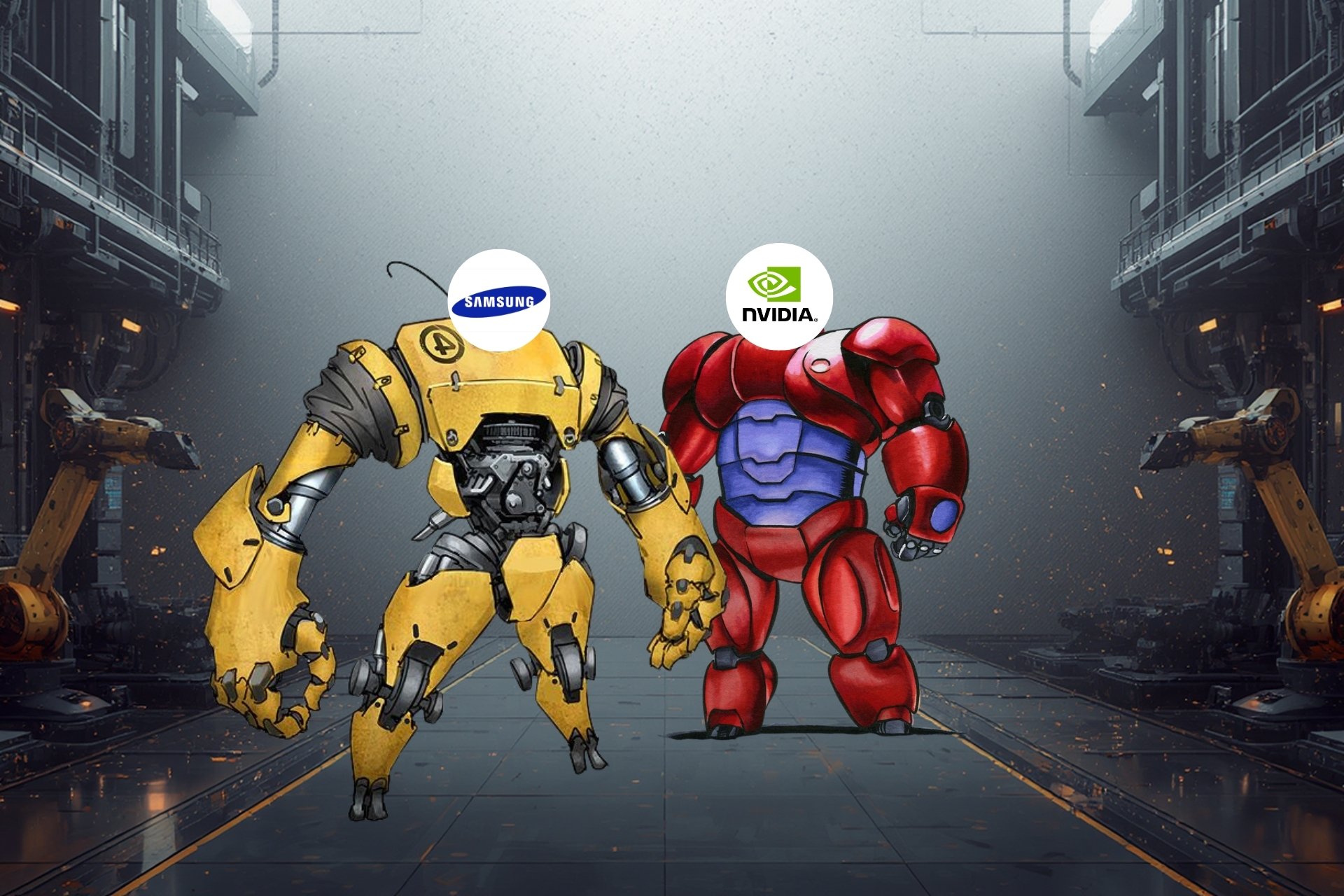
You’ve probably noticed everyone talking about “AI-powered” this, “AI-powered” that; like it’s some talk of the town.
And yes, of course it is. Every month or every week you can see news updates on something new, bigger and faster. The hype is so big that expectations far exceed what’s actually available now.
There’s a bigger problem happening now: we don’t have enough chips.
It’s like you found out the best video game in the world but you don’t have the console to play it with. It’s a brilliant software with huge datasets but it’s just that there is not proper hardware to run that.
And this is exactly why the Samsung–NVIDIA AI factory matters.
The Factory That Runs Itself
Earlier, designing a chip was like you are crafting a rolex watch. Engineers had to spend months and squeeze the hell out of the transistors to add it into a piece which is smaller than your fingernail.
Even one tiny mistake means everything goes down the drain. But now? The speed is now considered too slow because by the time a chip is ready, the AI model it was meant to be fixed is already outdated.
So, Samsung decided to do something bold. They built a huge AI factory full of 50,000+ NVIDIA GPUs as the brains that run AI. Now these GPUs run the factory itself.
The AI watches everything in real time – like the vibration, temperature change and every tiny step in the production and fixes the problems before something big happens.
Digital Twins: Predicting Mistakes Before They Happen
Samsung is also using something called digital twins.
Think of it like this: before a single machine moves, AI creates a virtual copy of the entire factory. It predicts mistakes before they happen.
Imagine building a 10-billion-piece Lego set. Normally, you follow the manual and hope you don’t mess up. Now imagine a system that warns you before you even pick the wrong brick. That’s digital twins.
The result?
- Design cycles shrink from 18 months to 12 months
- Production errors drop
- Success rates go up to 95%
Small improvements save billions and AI does it automatically. These aren’t just faster factories, they’re smart factories that learn as they go.
Why Memory Matters as Much as GPUs
Everyone talks about GPUs, the “brains” of AI. But a brain is useless if it can’t get data fast enough. That’s where HBM4 memory comes in.
If the GPU is a Ferrari, HBM4 is the high-octane fuel. Samsung’s HBM4 offers 12 terabytes per second of bandwidth. That’s like turning a narrow street into a 10-lane expressway for data.
Faster memory means faster AI. Simple as that.
Why India Should Care
You might be thinking: “Korea and the US… why should we care?”
Here’s why: India’s dream of making chips at scale through initiatives like the Semicon India Programme, depends on how these factories scale globally.
Better yields and faster production mean chip prices drop. That means Indian startups can finally train their own AI models without burning all their money on cloud servers.
It also means smarter infrastructure. Imagine a 5G tower in Mumbai or Delhi with a mini AI brain inside, your internet runs smoother even during rush hours.
Cheaper chips mean Indian engineers can experiment freely and compete globally. This isn’t a far-off fantasy, it’s happening now.
The Risks You Can’t Ignore
Of course, it’s not all rosy.
Too much NVIDIA power: They control GPUs, software, and AI frameworks. Price hikes affect everyone.
Energy hunger: 50,000 GPUs consume more electricity than some small towns. Scaling this sustainably is tough.
Geopolitical risks: Trade tensions can quickly turn these AI factories into expensive ghost towns.
The Bigger Picture
Most people miss this: this isn’t just about making chips faster or AI models bigger.
It’s about factories that think for themselves. Machines that predict failures, optimize production, and learn as they build.
The first HBM4-powered AI chips are expected in Q3 2026. That’s when we’ll see a whole new scale of innovation, powered by AI factory that can think and fix themselves. Humans just can’t move fast enough anymore.
Bottom Line
The Samsung–NVIDIA AI factory isn’t just a press release.
It’s a glimpse of the future, intelligent AI factory reshaping the world. The real opportunity lies in the hardware that makes AI possible.
Pay attention. The next chapter of AI is being written not just in software, but in smarter, self-learning factories. That’s where the real power and opportunity is.


