
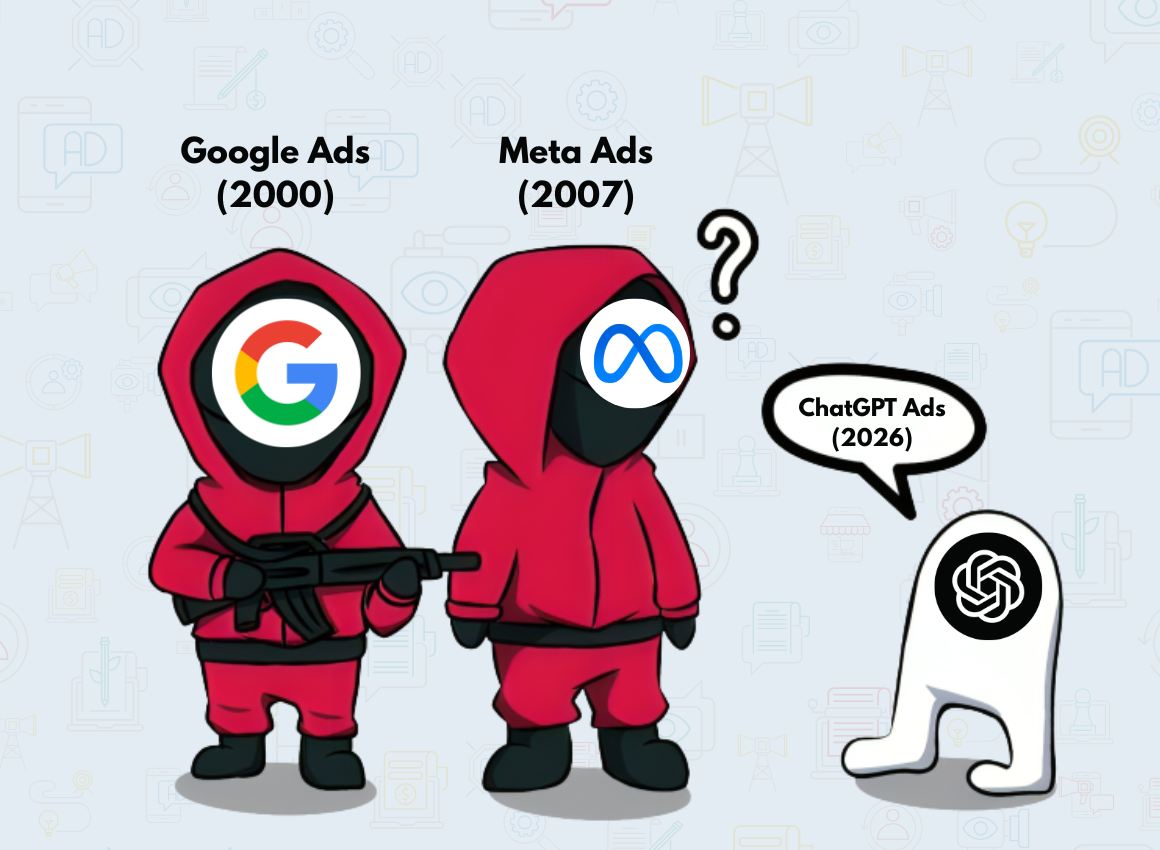
OpenAI is going to introduce ads in ChatGPT for Free and Go users starting from the US. It’s not like banners or pop-up ads that you’re expecting to see. Ads are going to be shown alongside AI answers, clearly labelled as ads.
I know, it almost reads like a feature update. But if you stop and think about where those ads are going to live, it gets uncomfortable very quickly.
ChatGPT isn’t a place to doomscroll or your personal motivator. People open it when they’re stuck, comparing, or deciding. And when ads show up at that exact moment – along with the answer, it’s not going to affect just visibility. It’s influence.
If you run a business or handle marketing, this isn’t about a new ad format. This is about how you get shortlisted before anyone ever sees your website.
What ChatGPT Advertising is Actually?
Let’s take it slow. Ads in ChatGPT aren’t going to replace answers. It’s going to appear along with them as a recommendation that works.
For example, you ask for a pasta recipe and GPT answers with the steps to make them. And alongside the answer, a clearly labelled ad for a sauce or utensil may also casually show up. Or take another example, you ask which project management tool fits a small team and you get the comparison first, followed by a relevant product.
The ads are clearly labelled, and you can dismiss them or choose ad-free paid plans. And they’re shown based on broad context, without using your personal chat history for ad targeting.
Why ChatGPT Is Adding Ads Now (And Not Earlier)
ChatGPT didn’t avoid ads because ads don’t work. It avoided ads because ads before trust kill products.
Since ChatGPT’s launch in 2022, the priority has been habit formation. Get people comfortable asking real questions. And adding ads too early would have made every answer feel suspicious. And that actually worked.
Today, ChatGPT is no longer a small thing but an entire infrastructure. OpenAI has publicly shared that ChatGPT crossed over 100 million weekly active users, with usage increasingly skewed toward work, learning, and decision-making. At that scale, inference costs are real and ongoing.
Subscriptions help, but free usage scales faster than paid usage ever will. Ads become the pressure valve. That’s also why ads only appear for Free and Go users. Plus, Pro, and Business plans stay ad-free. You pay with money or attention. Not both.
How Is ChatGPT Advertising Different From Google Search Ads?
Google search ads appear while you explore. ChatGPT ads appear while you decide.
On Google, you open tabs. You skim links. You compare manually. In ChatGPT, you often ask one question and stop. The assistant collapses the decision for you. That changes everything.
Yes, you get fewer impressions. But much higher intent and almost zero tolerance for irrelevance. A bad Google ad gets ignored. A bad ChatGPT ad feels misplaced and sometimes manipulative.
That difference forces you to think about fit, not just copy. And most brands aren’t built for that kind of scrutiny.
How Are AI Assistants Already Changing Buying Behaviour?
Instead of reading five blogs, you ask ChatGPT which tool to use. Instead of scrolling reviews, you ask whether something is worth the price. Instead of crowdsourcing opinions, you ask for a comparison.
ChatGPT becomes the first filter. By the time someone lands on your site or books a call, they’ve already ruled out options. Before analytics ever catch it. That’s why advertising inside AI assistants matters more than another social placement, even if the reach looks smaller on paper.
Will ChatGPT Ads Affect SEO?
Yes, it’s going to. But it’s not going to be too dramatic or something. ChatGPT won’t replace SEO. But SEO alone won’t protect your visibility anymore.
Inside AI answers, ranking links matters less than clarity, credibility, and whether your brand fits naturally into the answer. Content written just to rank struggles here. Content written to actually explain things performs better.
If your brand never appears in AI answers, users don’t think, “Let me research more.”
They think, “This must not be relevant.” That assumption forms fast. And it’s hard to undo.
What ChatGPT Ads Will Reward (And Punish)
ChatGPT ads don’t reward volume. It rewards alignment. If your product belongs in the answer, ads amplify you. If it doesn’t, ads expose the mismatch immediately. There’s nowhere to hide inside an answer.
This is not a space for exaggerated claims or aggressive CTAs. AI environments don’t tolerate friction well and instead they surface it. That’s not a moral judgement. It’s a design reality.
What You Should Do Before This Gets Crowded
Waiting for a polished “ChatGPT Ads dashboard” is risky.
Start with basics. Can you explain what you do clearly, without hype? Does your content answer real questions instead of circling around selling points? Would an AI assistant recommend you without sounding awkward or defensive?
Ads in ChatGPT and organic AI visibility will blur together. You won’t manage them as separate channels for long. Trying to game this system will backfire faster than old SEO tricks ever did. Platforms built around reasoning punish shortcuts.
Final Thought
Ads in ChatGPT won’t ruin AI. But they will expose which brands actually help people and which ones rely on noise.
In 2026, marketing won’t just be about clicks or reach. It’ll be about whether you show up when someone is deciding.


